
On this page
People are earning money with AI agents, but the details matter more than the headlines. An AI agent is software that can take a goal, break it into steps, use tools, and carry out work with limited supervision. This guide explains the main ways people turn that capability into income, what each route demands, and how to separate real results from marketing.
Key takeaways
- AI agents rarely generate income by themselves. Income usually comes from a human offering a service or product that agents help deliver.
- The main models are services, products, content, and internal automation for existing businesses.
- Every route involves costs, time, and risk that sales pages tend to leave out.
- Any income figure you read should have a source, a clear definition, and a time period. If it does not, treat it as unverified.
What is an AI agent, and why does it matter for income?
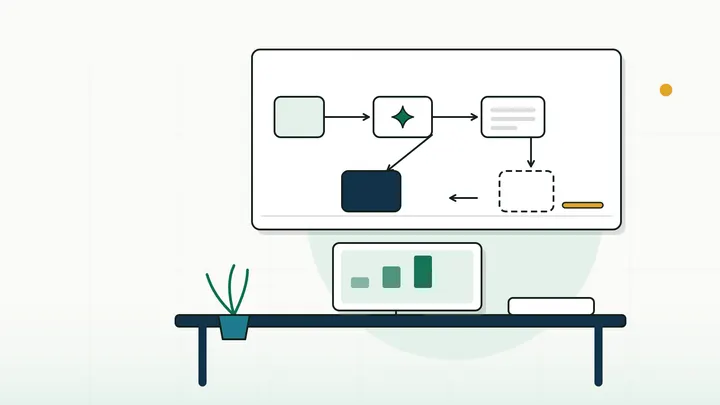
A basic AI tool answers one prompt at a time. An agent goes further. It can plan a sequence of actions, call other software, check its own output, and continue until a task is done. Examples of tasks include researching a topic, sorting incoming emails, drafting and formatting documents, or updating records across several systems.
That matters for income because labor is the main cost in many small digital businesses. If an agent handles part of the work, one person can deliver more, faster, or at lower cost. The value still has to be captured by someone: a client who pays for a result, a customer who buys a product, or an audience that supports content.
This is also where most confusion starts. “The agent did the work” is not the same as “the agent earned the money.” A buyer was found, a price was agreed, quality was checked, and someone took responsibility for errors. Those are human jobs.
The main ways people earn with AI agents
Each route below has an example from our graded cases, with its evidence label. Not every example uses an agent in the strict sense, so each one says what the AI does. An example shows one result, not a typical one.
 Selling services powered by agents
 Building and selling automation setups
 Creating digital products
 Content and audience models
 Automating tasks inside an existing job or business
1. Selling services powered by agents
The most common route is offering a service where agents do part of the production. Typical categories include:
- Research and summarization for businesses
- Content drafting and editing
- Customer support setup and triage
- Data cleaning, tagging, and reporting
- Workflow automation for small teams
The seller’s value is knowing the client’s problem, designing the process, supervising output, and taking responsibility for results. Agents reduce the time per job, which can improve margins or allow lower prices.
Real example: Chad Vavra (Chat Agency AI), grade B, Reported, not independently verified. Vavra co-founded Chat Agency AI, an AI consultancy that builds custom AI systems for business clients, in January 2026. The client reviews and can edit each AI suggestion before anything runs. In a Starter Story interview published 2026-02-15, Vavra said the agency was “at the $10K revenue mark” per month. The figure is self-reported monthly revenue, given early in the business’s life.
2. Building and selling automation setups
Some people specialize in building agent workflows for others, such as an automated lead-qualification process or a document-handling pipeline. Income may come from one-off project fees, monthly maintenance retainers, or both.
This route requires technical comfort and the ability to explain results to non-technical buyers. It also creates ongoing obligations: when a tool changes or a process breaks, the client expects a fix.
Real example: Liam Ottley (Morningside AI), grade B, Reported, not independently verified. Morningside AI builds AI solutions for business clients. In his own newsletter (2024-11-12), Ottley says a paid “exploration milestone”, a scoping step priced at $800 to $4,000, helped the agency reach $20,000–$30,000 a month consistently and later a first $100,000+ month. He gives no dates for either milestone. The $800 to $4,000 is a price per engagement, not total income. Ottley also sells AI education through YouTube and a Skool community, which is a separate income stream.
3. Creating digital products
Others use agents to help produce digital products such as templates, guides, datasets, or small software tools. Income comes from sales over time, not from hourly work.
The challenge is demand. Producing a product is now easier than ever, which means more competition and more noise. Distribution and trust matter at least as much as production.
Real example: Postiz, grade A, Verified for the stated product metric only. Nevo David founded Postiz, an open-source social media scheduler in which AI agents plan, generate, and schedule posts. TrustMRR shows $265,825 MRR (monthly recurring revenue) from 7,770 active subscriptions, Stripe-verified and last updated 2026-10-13. This is the product’s revenue, not profit and not the founder’s personal income.
4. Content and audience models
Some creators use agents to support research, drafting, editing, and publishing workflows for newsletters, videos, or websites. Income can come from advertising, sponsorships, subscriptions, or affiliate commissions.
This model is slow to build and depends heavily on audience trust. Publishing large volumes of low-quality material tends to perform poorly and can violate platform rules.
Real example: Ben Tossell (Ben’s Bites), grade B, Reported, not independently verified. Ben’s Bites started as a daily AI newsletter and became a paid AI education portal, as Tossell moved away from advertising toward selling AI education directly. In a 2024-09-29 interview (Peter Yang’s Behind the Craft), it is described as a “7-figure business” that scaled “to $1M+” in less than a year. The source does not say whether that is revenue or profit.
5. Automating tasks inside an existing job or business
Not all agent income looks like new revenue. Some people use agents to save time at work, reduce costs in their own company, or take on more clients without hiring. The gain shows up as higher margins, a promotion, or capacity, not as a separate income stream.
Real example: We have no graded case that measures this kind of gain; it is rarely published with evidence we can check. The closest is Nicole Cueto, grade B, Reported, not independently verified. Cueto, a public relations consultant in New York, uses ChatGPT, a chat tool rather than an agent, to research personalized vacation plans for clients in a side business. She says this halved her research time, and she fact-checks the output because it is not always accurate. Business Insider reported on 2023-07-31 that the side business averages $670 per month since January 2023, according to documents CNBC reviewed. That figure is the side business’s income, not a measure of the time saved, and the documents are not public.
What each route actually requires
| Model | Typical skills needed | Time to first income | Main risk |
|---|---|---|---|
| Agent-powered services | Domain knowledge, communication | Varies; depends on finding clients | Client acquisition |
| Automation setups | Technical skills, process design | Varies; project-based | Maintenance burden |
| Digital products | Product design, marketing | Often slow | Low demand, competition |
| Content and audience | Consistency, editorial judgment | Often slow | Platform dependence |
| Internal automation | Knowledge of your own workflow | Can be quick | Benefits hard to measure |
These are general patterns, not guarantees. Individual experiences differ widely, and we only publish specific timelines when a source supports them.
Costs and effort people often overlook
Income claims commonly leave out the cost side. When you assess any model, consider:
- Tool and usage costs. Subscriptions and usage-based fees can grow with volume.
- Your own time. Setup, supervision, and fixing mistakes are real work. Hours are part of the cost.
- Quality control. Agents can produce confident but wrong output. Review time is not optional.
- Marketing and sales. Finding buyers is usually the hardest part.
- Taxes and compliance. Income may be taxable, and some work involves data protection or professional rules.
- Platform rules. Some platforms restrict automated or AI-generated output.
A figure that mentions revenue but not costs does not tell you what someone kept.
How to read an AI income claim
Before you trust any claim you see online, ask these questions:
- Is there a source? A named, checkable record is stronger than a screenshot or a testimonial.
- Is it revenue or profit? Gross revenue can look impressive while profit is small or negative.
- What period does it cover? A single good month says little about steady income.
- What was excluded? Tools, ads, labor, refunds, and taxes all matter.
- Is the person selling something? A seller of courses or tools has a direct interest in the claim.
- Is the result typical? One standout case does not describe what most people experience.
If you cannot answer these, the claim is unverified. On this site, self-reported figures are labeled “Reported, not independently verified”, and claims we could not verify are labeled “Not verified” and kept out of our public listings. You can read more in our methodology and use the reader checklist on any claim you come across.
Common mistakes beginners make
- Starting with tools instead of a buyer. Choose a problem and a person who has it first.
- Expecting full automation. Most real setups need human review.
- Copying a claimed method without context. Another person’s result depended on their skills, network, and timing.
- Ignoring terms of service. Breaking platform rules can end an income source overnight.
- Paying for courses on the strength of income screenshots. These are often the least reliable evidence available.
For a deeper look at risks, see realistic AI side income models and pitfalls.
A sensible way to start
- Pick one skill or domain you already know.
- Identify a specific task people in that domain pay for.
- Test whether an agent can do part of that task reliably, and check the output yourself.
- Offer the result to a small number of real buyers and gather feedback.
- Track your time, costs, and revenue from day one.
- Only then decide whether to scale, change direction, or stop.
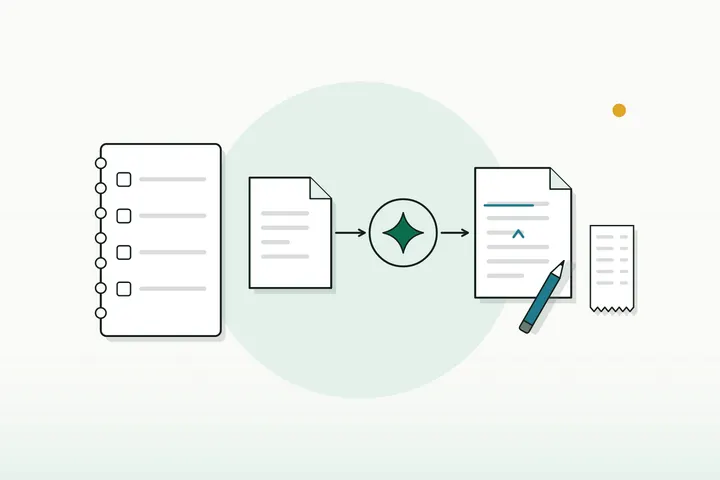
Keeping records also helps if you ever want to share your results. Well-documented cases are what this site is built around.
What to do next
- Read how we grade claims in our methodology.
- Compare models and their pitfalls in realistic AI side income models and pitfalls.
- Browse the graded case catalogue.
- See how agency income claims hold up in AI automation agency income claims: what they show.
- Learn the warning signs in AI income scams: what recent FTC actions show.
Disclaimers
Not financial advice. Proof of AI Income provides information and analysis for educational purposes only. Nothing on this site is financial, investment, tax, or legal advice. Consult a qualified professional before making financial decisions.
Results vary. Income examples are not promises or predictions. Outcomes depend on skills, effort, market conditions, and many other factors. Most people will not achieve the results described in any single example.