
On this page
DRAFT – not for publication
Affiliate disclosure. This page does not currently contain affiliate links. It may include affiliate links to tools such as n8n and Make in future. Affiliate relationships never influence our fact-checking or which claims we publish.
Do AI automation agencies really earn what their founders say? From the public cases we have graded so far, the honest answer is: we cannot independently confirm it. Every agency income claim we reviewed is self-reported. One figure we looked at turned out to be a price per client, not total income. This article shows what each claim actually measures and gives you questions to ask before you trust one.
Key takeaways
- We graded two public AI agency cases. Both are graded B (reported, not independently verified). A third agency figure is a price per client, not income, so we did not grade it. A fourth agency claim is not included as a case because course sales appear to be the founder’s main income.
- Neither of the two graded income figures has been confirmed by a third party such as a payment dashboard or published accounts.
- A monthly retainer price is not monthly revenue. A record month is not a typical month.
- Many visible agency founders also sell education about running an agency. Under our criteria, client revenue and education revenue must be kept apart.
- Tools like n8n and Make are used in this work. Using the same tools does not mean you will earn the same income.
What an AI automation agency is
An AI automation agency builds automated workflows for business clients. Typical work includes lead handling, cold email systems, customer support chatbots, and internal data workflows. Agencies often use no-code or low-code automation tools such as n8n or Make , connected to AI models such as ChatGPT.
The agency earns money from clients through project fees, discovery engagements, or monthly retainers. That client revenue is what we try to verify.
What the income claims actually say
The table below lists each case as graded in our database on 2026-10-14. Grades follow our methodology. All figures are the founders’ own claims unless stated otherwise.
| Founder (agency) | Grade | Claim, as stated | What the figure measures | Source |
|---|---|---|---|---|
| Liam Ottley (Morningside AI) | B | “$20,000 - $30,000 p/m range consistently,” later “our first $100,000+ month” | Agency revenue range and one record month; no dates given; self-reported | Ottley’s own newsletter, 2024-11-12 |
| Chad Vavra (Chat Agency AI) | B | “We’re at the $10K revenue mark” (monthly) | Monthly revenue; self-reported in an interview | Starter Story interview, published 2026-02-15 |
- Liam Ottley (Morningside AI)
AI services and creator businesses · AIB · Reported, not independently verified - Chad Vavra (Chat Agency AI)
AI services and creator businesses · AIB · Reported, not independently verified
Liam Ottley and Morningside AI (grade B)
Ottley says that a paid “exploration milestone”, a scoping step priced at $800 to $4,000, helped Morningside AI reach $20,000–$30,000 a month consistently and later a first $100,000+ month. He gives no dates for either milestone.
He also claims “over $3M in revenue” across his ventures. We do not use that figure as agency revenue, because it is not split between the agency and his other businesses, including AI education through YouTube and a Skool community.
Chad Vavra and Chat Agency AI (grade B)
Vavra co-founded Chat Agency AI in January 2026. In a Starter Story interview published on February 15, 2026, he said the agency was “at the $10K revenue mark” per month. The figure is self-reported and was given early in the business’s life. We have no later update.
A pricing figure that is not income
An August 2026 profile in a business publication describes a solo founder of a marketing agency who uses AI agents. The article says the founder charges monthly retainers “in the $20,000 to $30,000 range”. We do not name the founder or the agency here, because we have not given them a chance to respond.

This shows why definitions matter. The figure is a price per client, not monthly income. The same article only gives a capacity estimate (the founder says one person could manage “maybe 25 clients”), not the number of clients the agency actually has. Without that number, the price says nothing about total revenue. We therefore do not treat it as an income claim and do not grade it.
The course-revenue problem
Agency founders who share income figures often also publish YouTube videos, newsletters, or paid communities about starting an agency. That is not wrong in itself. But it creates two problems for readers:

- Mixed revenue. A headline figure may combine client work with education sales. Ottley’s $3M+ total is an example of a figure we could not separate.
- Incentive. A founder who earns from teaching the model has a reason to present the model favorably.
Under our criteria, a claim is not published as a case if the income mainly comes from selling courses or coaching about making money with AI. One agency claim we looked at falls under that rule. Nick Saraev writes on his own biography page that his AI consultancy, LeftClick, reached “a little over $72K in one month”. The page does not say when. The same page says his businesses “generate a combined $4M+ per year in revenue” and that “Maker School alone does $330,000/mo”, a paid community for which it lists “2,200+ paying members at $184/mo”. These are his own figures and we have not verified them. Since $330,000 a month is roughly the same as the $4M+ a year he gives for all his businesses together, most of his stated revenue appears to come from the course community, and we have not included his agency figure as a case. We have not contacted him.
Ottley, graded above, also sells AI education through YouTube and a Skool community; for him we use only the figures his source ties to the agency.
How to check an AI agency income claim yourself
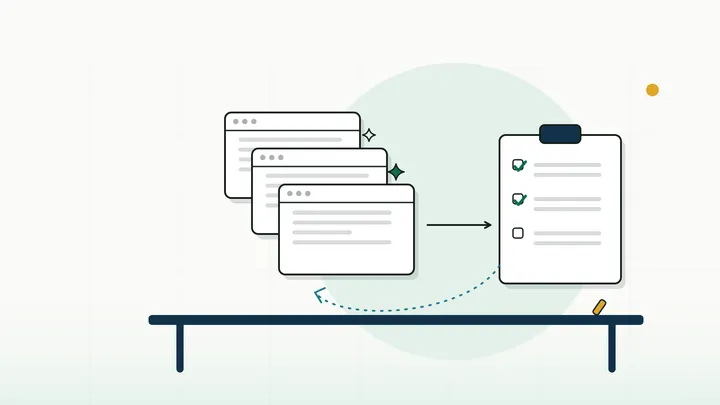
Ask these questions about any agency income figure you see:
- Is it revenue or profit? Agency work has costs: tools, contractors, ads, and the founder’s time.
- Is it one month or typical? “My first $100K month” and “$100K a month” are different claims.
- Is it a price or a total? A retainer price tells you what one client pays, not how many clients there are.
- Where does the money come from? Client work, courses, community memberships, and affiliate income should be listed separately.
- Who confirms it? A founder’s post is a starting point. Payment dashboards, published accounts, or a journalist who reviewed documents are stronger.
- When was it true? Agency revenue can rise and fall quickly. Look for a date on every figure.
For the full list, see our reader checklist for AI income claims.
Risks, limits, and pitfalls
- Small sample. Two graded cases do not describe the AI agency market. They describe two public claims.
- Survivorship. People who share figures publicly tend to be the ones with figures worth sharing. We have no data on agencies that failed.
- Client risk. Agency revenue often depends on a few clients. Losing one can change the picture quickly.
- Tools are not the business. n8n and Make are building tools. Finding clients, scoping projects, and maintaining systems are the harder parts, and the tools do not do them for you.
- Claims change. We re-check figures when we update a case. Grades can move up or down.
What to do next
- Before paying for an agency course, ask the seller to separate client revenue from education revenue, in writing.
- If you want to test the model, start with one small paid project, and track your own costs and hours.
- If you are an agency founder with independently verifiable client revenue, you can submit it for review. See our right of reply and corrections policy.
Related reading
- How we verify AI income claims
- How people earn money with AI agents: a practical guide
- AI income scams: what recent FTC actions show
- A reader checklist for any AI income claim
Sources
All sources were opened by our case researchers on 2026-10-14. Full evidence records are kept in the case files.
- Nick Saraev: biography page, nicksaraev.com: https://nicksaraev.com/biography
- Liam Ottley: “5 regrets after 667 days of AI entrepreneurship,” Morningside AI newsletter, 2024-11-12: https://morningsideai.beehiiv.com/p/5-regrets-after-667-days-of-ai-entrepreneurship
- Chad Vavra: Starter Story interview, “I Built a $10K/Month Business Helping Businesses Use AI,” published 2026-02-15: https://www.starterstory.com/stories/chat-agency-ai
Disclaimers
Not financial advice. Proof of AI Income provides information and analysis for educational purposes only. Nothing on this site is financial, investment, tax, or legal advice. Consult a qualified professional before making financial decisions.
Results vary. Income examples are not promises or predictions. Outcomes depend on skills, effort, market conditions, and many other factors. Most people will not achieve the results described in any single example.
Affiliate disclosure. This page does not currently contain affiliate links. It may include them in future.